How to Draw Landscapes From Photos Without Getting Lost in Detail
A simple landscape drawing workflow for turning photo references into readable sketches with strong shapes, depth, and value.

Landscape photos often contain too much information: grass, rocks, clouds, trees, reflections, mountain ridges, and atmospheric haze. A strong landscape drawing starts by choosing what matters most.
Find the big value groups
Squint at the photo and look for three groups: light, middle, and dark. Most landscape drawings fail when every patch of grass receives the same attention. Value grouping helps the viewer read depth before detail.

Simplify repeated textures
You do not need to draw every tree or blade of grass. Use a few repeated marks to suggest texture, then leave quiet space where the eye can rest. The viewer will fill in more than you expect.
- Use larger shapes for distant mountains.
- Keep far trees lighter and less detailed.
- Make foreground marks larger and darker.
- Reserve sharp contrast for the focal area.
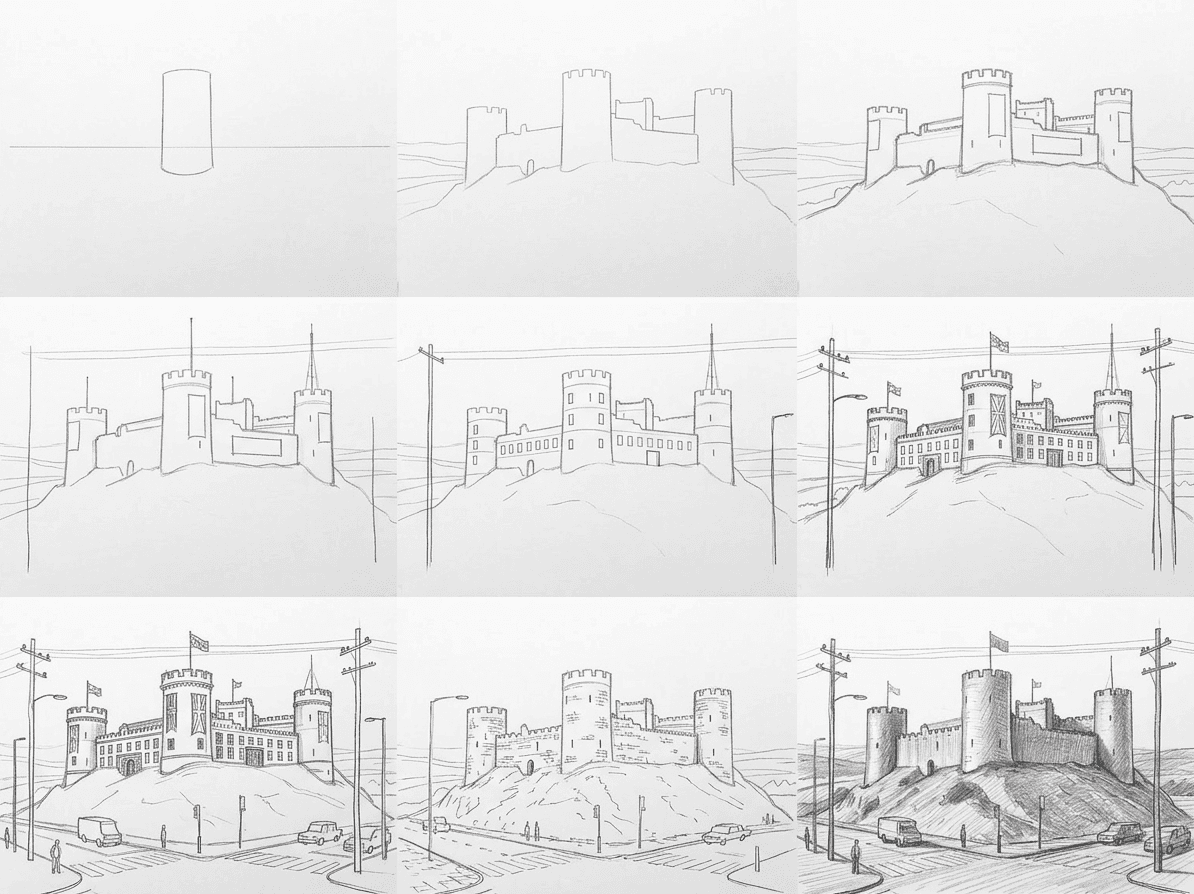
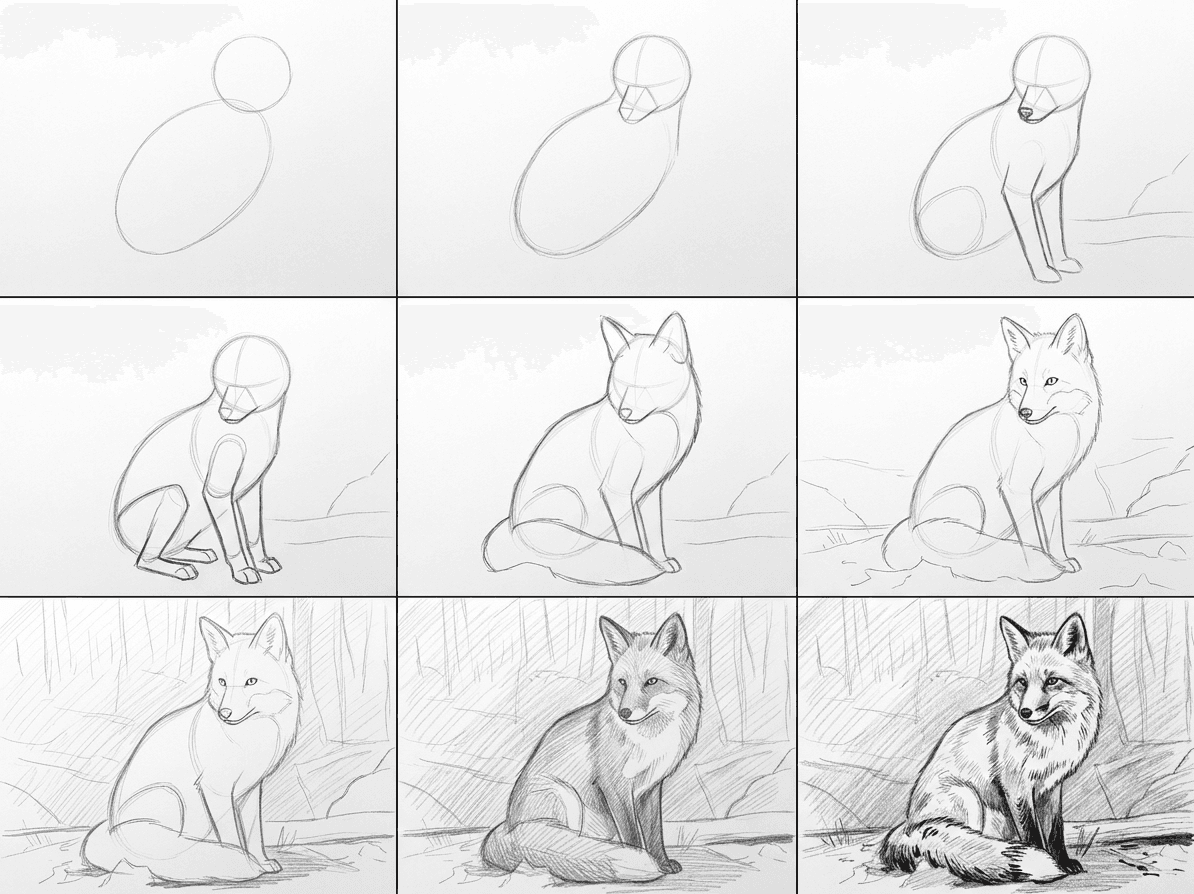
When a landscape tutorial works well, it teaches you what to ignore as much as what to draw. That is why a staged approach is helpful: it keeps the first pass broad and saves texture for the end.